
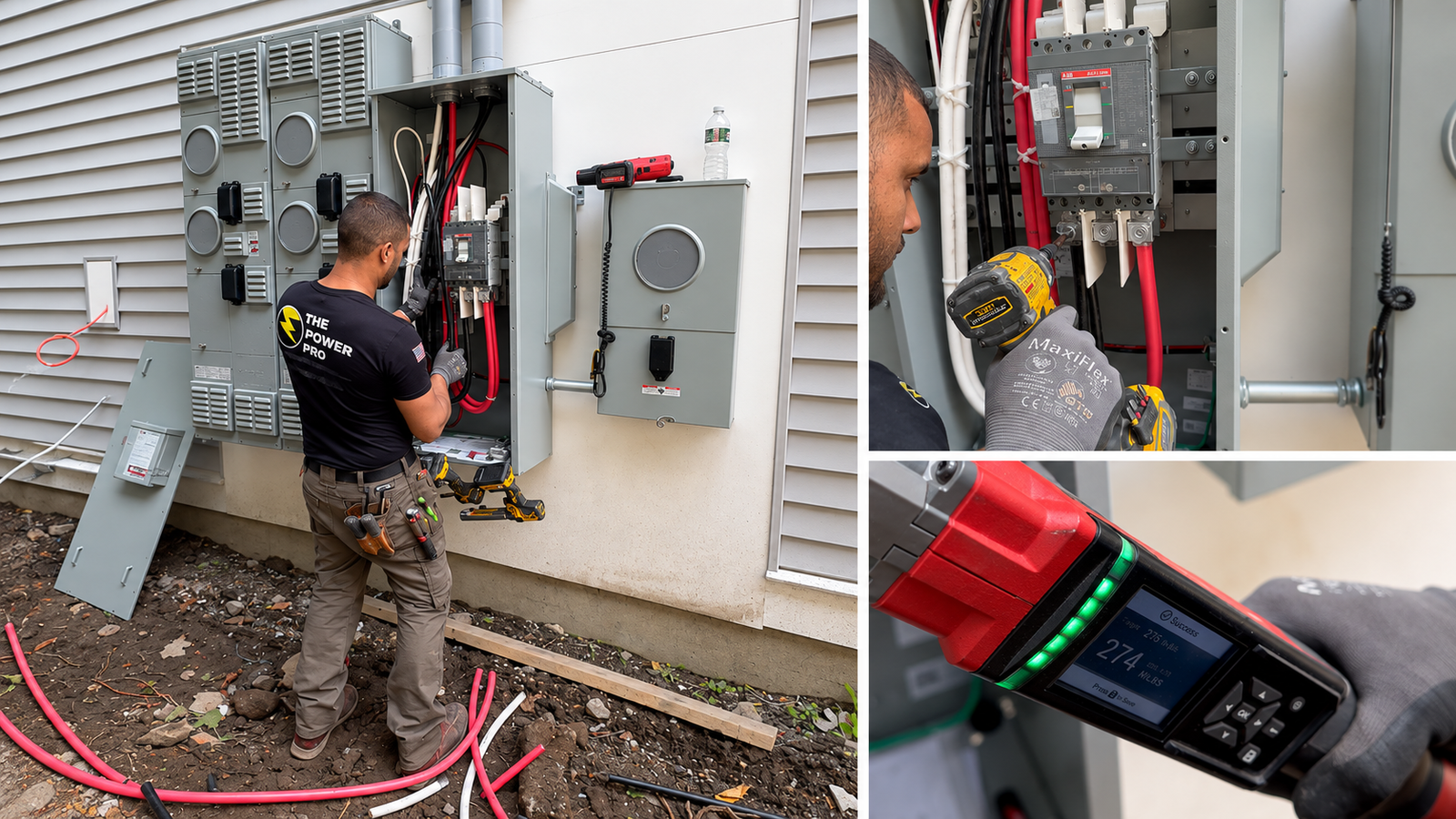
When homeowners hear “electrical upgrade,” many immediately think about replacing the electrical panel.
The panel is important, but it is only one part of the system that brings power into a property and distributes it safely throughout the building.
A professional Electrical Service Upgrade in Massachusetts may involve service equipment, conductors, disconnects, meter-related infrastructure, grounding and bonding, panel integration, connections, and careful verification of the completed installation.
Understanding how these components work together helps homeowners make better decisions when their property needs more electrical capacity, updated equipment, or a safer and more reliable electrical system.
What Is an Electrical Service?
The electrical service is the infrastructure that connects utility power to the property’s electrical system.
Once electricity reaches the building, several components work together before power is distributed to lighting, outlets, appliances, HVAC equipment, and other electrical loads.
Depending on the property and system design, this can include:
- service entrance conductors;
- meter equipment;
- service disconnect equipment;
- electrical panels;
- breakers;
- grounding and bonding components;
- conduit;
- feeder conductors;
- service connections.
That is why evaluating only the panel does not always provide a complete picture of the electrical system.
What Is an Electrical Service Upgrade?
An electrical service upgrade involves updating part or all of the equipment responsible for bringing and distributing electrical power within a property.
The exact scope depends on the existing system, condition of the equipment, electrical demand, and project requirements.
An upgrade may involve:
- replacing outdated service equipment;
- installing new conductors;
- updating the main disconnect;
- replacing or upgrading the electrical panel;
- reorganizing distribution equipment;
- improving conduit and wiring pathways;
- updating grounding and bonding;
- preparing the system for additional electrical demand;
- replacing deteriorated or inadequate components.
Not every property requires the same work.
A professional evaluation should determine what actually needs to be changed before the project begins.
The Electrical Panel Is Only Part of the System
The electrical panel distributes power to individual circuits throughout the property.
However, the panel depends on the infrastructure feeding it.
A new panel connected to inadequate service equipment does not automatically solve every electrical limitation.
The entire path of power needs to be considered.
That includes how electricity enters the property, how it is disconnected when necessary, how conductors are sized and protected, and how the system distributes power to the circuits inside the building.
This system-wide approach is especially important when a property is adding significant new electrical loads.
For additional information about professional electrical work in Massachusetts, visit The Power Pro Electrical Services.
Why Would a Property Need an Electrical Service Upgrade?
Electrical demand has changed significantly in modern homes.
Properties now commonly support equipment that older electrical systems were never designed to handle.
An electrical service evaluation may be appropriate when adding or planning:
- mini split or HVAC systems;
- EV charging;
- electric cooking equipment;
- electric dryers;
- hot tubs;
- heated flooring;
- workshops;
- additions;
- finished basements;
- outdoor living spaces;
- standby generators;
- major renovations.
A service upgrade may also be considered when the existing equipment is outdated, damaged, poorly organized, or no longer adequate for the property’s needs.
Signs the Existing Electrical Service May Need Attention
Some electrical problems are obvious. Others develop gradually.
Signs that should prompt a professional evaluation may include:
- breakers that trip repeatedly;
- visible deterioration around electrical equipment;
- overheating or unusual odors;
- damaged service components;
- insufficient breaker space;
- an older system that cannot support planned equipment;
- frequent electrical problems;
- major remodeling or expansion;
- plans to significantly increase electrical demand.
A breaker that repeatedly trips, for example, should not simply be reset indefinitely.
The reason for the repeated interruption should be identified.
Professional troubleshooting can determine whether the issue is related to the individual circuit, connected equipment, the panel, or another part of the electrical system.
Electrical Demand Matters
An electrical system must be able to support the loads connected to it.
As homeowners add more equipment, the total demand on the property can increase.
That does not mean every new appliance automatically requires a service upgrade. However, electrical demand should be evaluated when planning significant additions.
An electrician can review existing equipment, expected loads, panel configuration, and available capacity.
This is particularly important during renovations because construction provides an opportunity to evaluate the system before new walls, finishes, and equipment make changes more difficult.
Service Equipment and Disconnects
Service equipment includes components used to control and protect the incoming electrical supply.
A disconnect allows power to be shut off at an appropriate point in the system.
Depending on the installation, service equipment may be located outside, inside, or distributed among multiple components.
During an upgrade, electricians may need to coordinate new equipment with the existing meter, service entrance, panel, conduit, and utility connection.
The objective is to create a system in which each component works correctly with the others.
Why Connections Matter
Large electrical systems depend on secure and properly installed connections.
This is especially important at service equipment, where larger conductors may carry significant electrical loads.
Connections should be installed according to the specifications of the equipment being used.
Professional electrical work can include checking critical connection points and verifying that the installation meets the required specifications.
This is one reason specialized tools are often used during service work.
A connection should not simply “feel tight.”
Installation and verification should follow the requirements of the equipment.
Grounding and Bonding
Grounding and bonding are important parts of an electrical service.
Although homeowners rarely see or interact with these components, they contribute to the safe operation of the system.
During a service upgrade, existing grounding and bonding arrangements may need to be evaluated along with the rest of the infrastructure.
The specific requirements depend on the property and installation.
This is another reason electrical service work should be evaluated as a complete system rather than as an isolated panel replacement.
Planning for Future Electrical Needs
An electrical service upgrade can also be an opportunity to think ahead.
Homeowners increasingly add new electrical equipment over time.
Possible future additions may include:
- an EV charger;
- additional HVAC equipment;
- an electric water heater;
- a home addition;
- workshop equipment;
- outdoor power;
- pool equipment;
- a standby generator.
Planning for future demand during a larger electrical project may make later upgrades easier.
The goal is not to install unnecessary capacity. It is to understand how the property is expected to evolve and make informed decisions while the system is already being evaluated.
Electrical Service Upgrades During Renovations
Major renovations often reveal limitations that were not obvious before construction began.
Once walls are opened and equipment is exposed, electricians can evaluate existing wiring, panels, service equipment, and circuit organization more thoroughly.
This may reveal outdated components, crowded panels, insufficient capacity, or infrastructure that does not align with the new design.
For projects involving new wiring and open framing, our guide to Electrical Rough-In in Massachusetts explains why electrical planning should happen before finished surfaces are installed.
An electrical service evaluation can then determine whether the existing supply and distribution equipment can properly support the renovated space.
Electrical Service and Standby Generators
Standby generators are another example of why the complete electrical service matters.
A generator does not operate independently from the home’s electrical infrastructure.
A complete backup power installation may involve transfer equipment, service connections, conductors, disconnects, and integration with the existing electrical system.
If you are considering backup power, read our guide to Standby Generator Installation in Massachusetts to understand how the generator and electrical service work together.
Residential and Commercial Electrical Service Work
Electrical service upgrades are not limited to homes.
Commercial properties may also require service improvements when adding new equipment, expanding operations, renovating spaces, or replacing outdated infrastructure.
Commercial projects can involve larger loads and more complex distribution systems.
For businesses, electrical reliability can directly affect daily operations, equipment performance, employee productivity, and building access.
Professional planning is therefore essential for both residential and commercial service work.
What Happens During an Electrical Service Upgrade?
Every project is different, but the process generally begins with an evaluation.
1. Existing System Evaluation
The electrician reviews the service equipment, panel, conductors, electrical demand, and overall condition of the installation.
2. Project Planning
The scope of work is determined based on the property’s needs and the equipment being installed.
3. Equipment Preparation
New service equipment, conduit, conductors, disconnects, or panel components are prepared for installation.
4. Installation
Existing components are replaced or modified according to the project plan.
5. Connections
Conductors and equipment are connected according to applicable installation requirements.
6. Verification
Critical aspects of the installation are checked before the project is considered complete.
The exact process may vary depending on the property, local requirements, and coordination with the utility or other contractors.
Why Professional Installation Matters
Electrical service work involves the central infrastructure supplying power to the property.
Errors at this level can affect much more than a single outlet or lighting circuit.
Professional service work should prioritize:
- appropriate equipment;
- proper conductor installation;
- secure connections;
- safe equipment placement;
- organized routing;
- system accessibility;
- verification;
- long-term serviceability.
Quality electrical work is not defined only by how the installation looks when completed.
It is also defined by how the system performs after the project is finished.
Questions to Ask Before an Electrical Service Upgrade
Before starting a project, property owners should understand the scope of the proposed work.
Useful questions include:
- What part of the existing service needs to be replaced?
- Does the panel also need to be upgraded?
- Is additional electrical capacity required?
- Will grounding or bonding be updated?
- Will new service conductors be installed?
- Does the project require coordination with the utility?
- How will the new system support planned equipment?
- Is future electrical demand being considered?
- What testing or verification will be performed?
A professional contractor should be able to explain why specific work is recommended.
Electrical Service Upgrade in Massachusetts
A reliable electrical system begins before power reaches individual outlets and appliances.
Service equipment, conductors, panels, disconnects, connections, grounding, and distribution components all work together as one system.
That is why an Electrical Service Upgrade in Massachusetts should be planned around the complete electrical infrastructure rather than focused only on the panel.
The Power Pro Electrical Services provides professional electrical service work for residential and commercial properties throughout Massachusetts.
Our team focuses on careful evaluation, professional installation, proper connections, and electrical systems designed to support the needs of the property.
If you are planning an electrical upgrade, renovation, new equipment installation, or service evaluation, contact The Power Pro Electrical Services to discuss your project.
Frequently Asked Questions
Is an electrical service upgrade the same as a panel upgrade?
Not necessarily. A panel upgrade involves the distribution panel, while a service upgrade may involve additional equipment such as service conductors, disconnects, meter-related infrastructure, grounding, or other components.
How do I know if my electrical service needs an upgrade?
Repeated electrical problems, outdated equipment, major renovations, insufficient capacity, or plans for significant new electrical loads are reasons to schedule a professional evaluation.
Does adding a mini split require an electrical service upgrade?
Not always. The existing electrical system should be evaluated to determine whether it has appropriate capacity for the new equipment.
Can an electrical service upgrade prepare a home for future equipment?
Yes. Future electrical needs can be considered during the planning process, although the correct solution depends on the property and expected demand.
Why is torque verification important in electrical service work?
Certain electrical connections have manufacturer installation specifications. Proper verification helps confirm that critical connections have been installed according to those requirements.
Does electrical service work require utility coordination?
Some projects may require coordination with the utility or local authorities. The exact process depends on the type of work and the location of the property.
Can commercial properties need electrical service upgrades?
Yes. Businesses may need upgrades when adding equipment, renovating, expanding operations, or replacing outdated electrical infrastructure.