
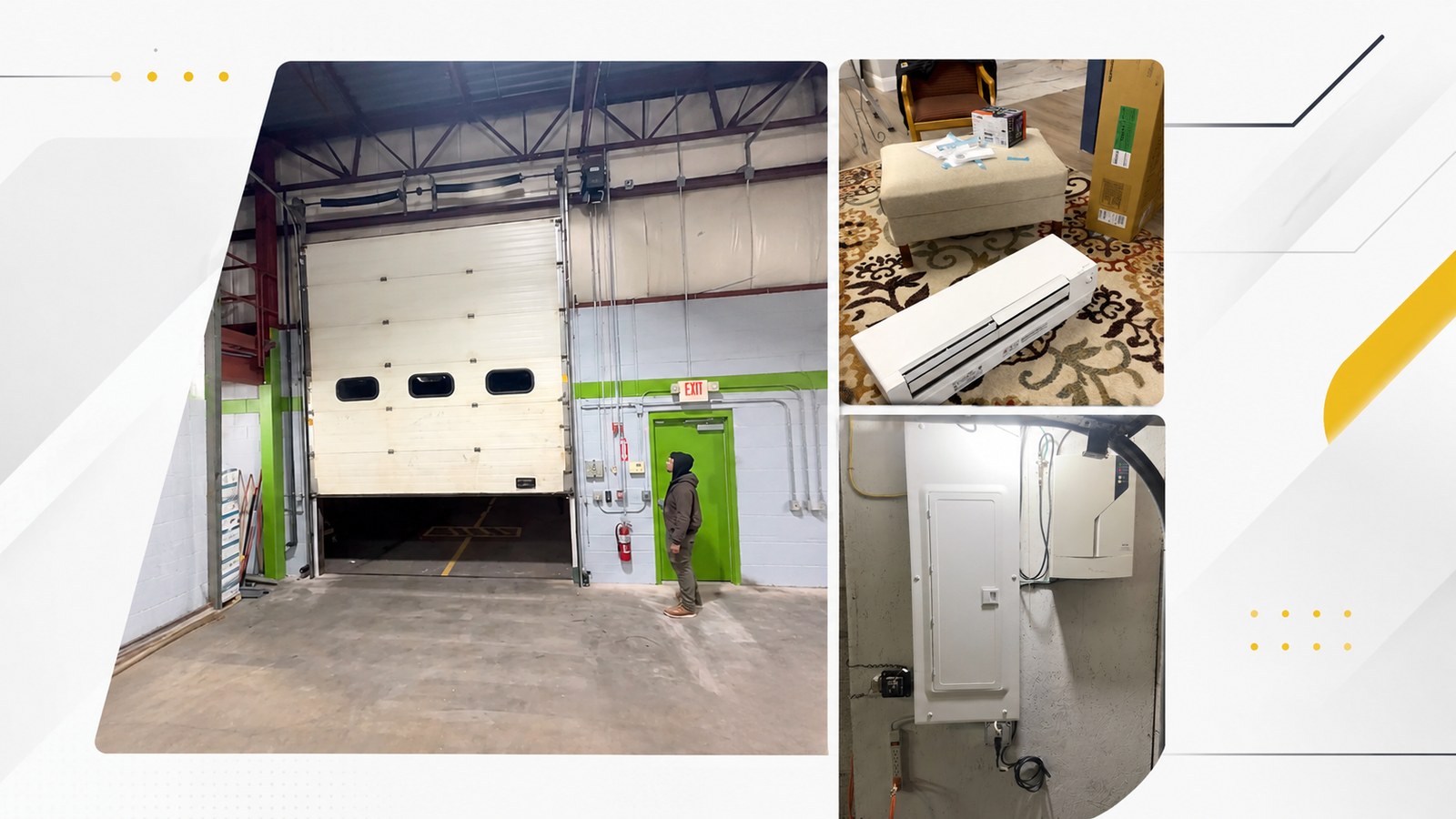
Commercial properties depend on electrical systems that can support daily operations safely and consistently.
From lighting and panels to automated equipment, HVAC systems, overhead doors, machinery, exterior power, and service upgrades, the electrical work behind a business must be planned with reliability in mind.
For companies across Massachusetts, professional commercial electrical services are not only about fixing immediate problems. They are about creating systems that can support productivity, safety, access, comfort, and long-term performance.
When the electrical infrastructure is done correctly, the business runs with fewer interruptions and greater confidence.
What Are Commercial Electrical Services?
Commercial electrical services include the installation, repair, upgrade, and maintenance of electrical systems for business properties.
These properties may include:
- offices;
- warehouses;
- retail spaces;
- restaurants;
- industrial buildings;
- service businesses;
- commercial garages;
- mixed-use properties;
- medical or professional spaces;
- commercial rental units.
Unlike basic residential work, commercial electrical projects often involve larger loads, more complex equipment, stricter operational demands, and systems that must perform consistently throughout the day.
A commercial electrical contractor must understand how the property is used, what equipment depends on the electrical system, and how to build an installation that supports the business safely.
Why Commercial Electrical Work Requires Proper Planning
A commercial electrical system must do more than supply power.
It must support the way the business actually operates.
That means the electrical contractor should consider:
- equipment requirements;
- daily usage patterns;
- electrical load demand;
- panel capacity;
- wiring routes;
- accessibility for maintenance;
- safety standards;
- future upgrades;
- code requirements;
- long-term reliability.
Poor planning can lead to overloaded circuits, unreliable equipment, frequent interruptions, unsafe conditions, or expensive corrections later.
Professional planning helps ensure that the system is not only functional today, but prepared for how the property will be used over time.
Electrical Support for Automated Commercial Systems
Many modern commercial properties use automated systems that depend on proper electrical integration.
This may include:
- motorized overhead doors;
- access control systems;
- automatic gates;
- commercial HVAC equipment;
- lighting controls;
- security systems;
- garage and warehouse equipment;
- mechanical systems;
- specialty business equipment.
These systems often require more than a simple connection.
They may need dedicated wiring, proper controls, safe disconnects, correctly sized circuits, integration with existing infrastructure, and final testing to confirm that everything responds as expected.
For example, a motorized overhead door depends on electrical work that supports safe movement, consistent response, and daily use. If the wiring, controls, or power supply are not installed correctly, the system may fail, operate inconsistently, or create safety concerns.
Professional commercial electrical services help ensure that automated equipment is supported by the right electrical foundation.
The Importance of Safe Wiring and Connections
Wiring is one of the most important parts of any commercial electrical project.
Safe wiring helps protect equipment, people, and the property itself.
A professional installation should include:
- properly sized conductors;
- secure connections;
- appropriate conduit;
- protected wiring routes;
- clear equipment access;
- correct grounding and bonding;
- neat organization;
- compliance with applicable codes.
In commercial environments, wiring may support high-demand equipment, frequent operation, and multiple users throughout the day.
That is why clean, organized, and properly protected wiring is essential for long-term performance.
Electrical Panels and Commercial Capacity
Electrical panels are the central point of distribution for many commercial systems.
If a business adds new equipment, upgrades existing systems, renovates a space, or expands operations, the electrical panel may need to be evaluated.
A commercial panel evaluation may consider:
- available capacity;
- circuit organization;
- load requirements;
- breaker configuration;
- equipment demand;
- safety concerns;
- space for future circuits;
- condition of existing components.
Not every project requires a full panel replacement, but the panel must be able to support the electrical needs of the business.
A properly planned panel setup helps create a safer and more manageable system for current and future operations.
Commercial Electrical Work for HVAC and Mechanical Systems
Commercial comfort also depends on electrical support.
HVAC systems, mini splits, rooftop units, ventilation equipment, and other mechanical systems require proper electrical connections to operate safely and efficiently.
Electrical work for HVAC systems may include:
- dedicated circuits;
- disconnect installation;
- wiring and conduit;
- breaker installation;
- panel coordination;
- equipment connection;
- final testing.
When the electrical side is installed correctly, the equipment is better prepared to run consistently and support everyday comfort inside the property.
This is important for employees, customers, tenants, and anyone using the space.
Why Testing Matters Before a System Is Complete
A commercial electrical installation should not end when the equipment is connected.
Final testing is an important part of the process.
Testing helps confirm that:
- equipment receives proper power;
- circuits are functioning as intended;
- controls respond correctly;
- safety devices are working;
- connections are secure;
- the system is ready for daily use.
For automated systems, testing is especially important because the equipment must respond reliably during repeated operation.
A system that is simply connected is not the same as a system that is ready to perform.
Signs Your Business May Need Commercial Electrical Service
Business owners and property managers should consider professional electrical evaluation when they notice:
- frequent breaker trips;
- flickering lights;
- outdated panels;
- overloaded outlets;
- equipment that does not operate consistently;
- plans to add new equipment;
- expansion or remodeling;
- heating or cooling upgrades;
- unsafe or exposed wiring;
- limited power availability;
- old or poorly organized electrical work.
Electrical issues should not be ignored in a commercial property.
Delaying service can increase risk, affect operations, and lead to larger problems over time.
Commercial Electrical Upgrades for Growing Businesses
As businesses grow, their electrical needs often change.
A property that once had enough capacity may eventually need additional circuits, upgraded service, improved wiring, new equipment connections, or better system organization.
Commercial electrical upgrades may support:
- new machinery;
- additional workstations;
- improved lighting;
- HVAC installation;
- security systems;
- warehouse equipment;
- exterior power;
- access systems;
- business expansion;
- code compliance.
Professional upgrades help align the electrical system with the current and future demands of the business.
Why Workmanship Matters in Commercial Electrical Projects
Commercial electrical work must be built for real use.
A clean and professional installation can make future maintenance, troubleshooting, inspections, and upgrades easier.
Good workmanship includes:
- organized wiring;
- properly supported conduit;
- accessible equipment;
- labeled components;
- secure mounting;
- protected connections;
- clean routing;
- attention to detail.
Quality workmanship is not only about appearance.
It affects safety, serviceability, reliability, and long-term performance.
Choosing a Commercial Electrician in Massachusetts
When hiring a commercial electrician, business owners should look for a contractor who understands both the technical work and the operational needs of the property.
Important questions include:
- Does the contractor have experience with commercial systems?
- Will the existing electrical infrastructure be evaluated?
- Can the contractor support equipment integration?
- Will wiring, panels, and controls be planned correctly?
- Are safety and code requirements being considered?
- Will the system be tested before completion?
- Is the installation designed for long-term serviceability?
The right electrician should be able to explain the work clearly and complete the project with a focus on safety, reliability, and proper performance.
Professional Commercial Electrical Services in Massachusetts
Commercial electrical systems play a major role in how a business operates every day.
Whether the project involves automated equipment, panel work, HVAC support, wiring, lighting, service upgrades, or system integration, the electrical foundation must be installed correctly.
The Power Pro Electrical Services provides professional commercial electrical services in Massachusetts for businesses that need safe, reliable, and well-planned electrical work.
Our team focuses on proper installation, clean execution, system integration, and long-term performance for commercial properties.
Contact The Power Pro Electrical Services to discuss your next commercial electrical project in Massachusetts.
Frequently Asked Questions
What types of commercial electrical services are available?
Commercial electrical services may include wiring, panel work, lighting, equipment connections, service upgrades, HVAC electrical support, automated system integration, troubleshooting, repairs, and maintenance.
Why does automated commercial equipment need professional electrical work?
Automated equipment depends on proper wiring, controls, power supply, and testing. Professional electrical installation helps the system operate safely and consistently.
Does every commercial project require a panel upgrade?
Not always. The existing panel should be evaluated to determine whether it has enough capacity and proper organization for the equipment or system being installed.
Can commercial electrical work support HVAC systems?
Yes. HVAC and mini split systems often require dedicated electrical circuits, disconnects, wiring, conduit, and proper panel coordination.
Why is testing important after installation?
Testing helps confirm that the system operates correctly, responds as expected, and is ready for daily commercial use.
When should a business schedule an electrical evaluation?
A business should schedule an evaluation when adding new equipment, renovating, expanding, experiencing electrical issues, upgrading HVAC systems, or working with outdated electrical infrastructure.