
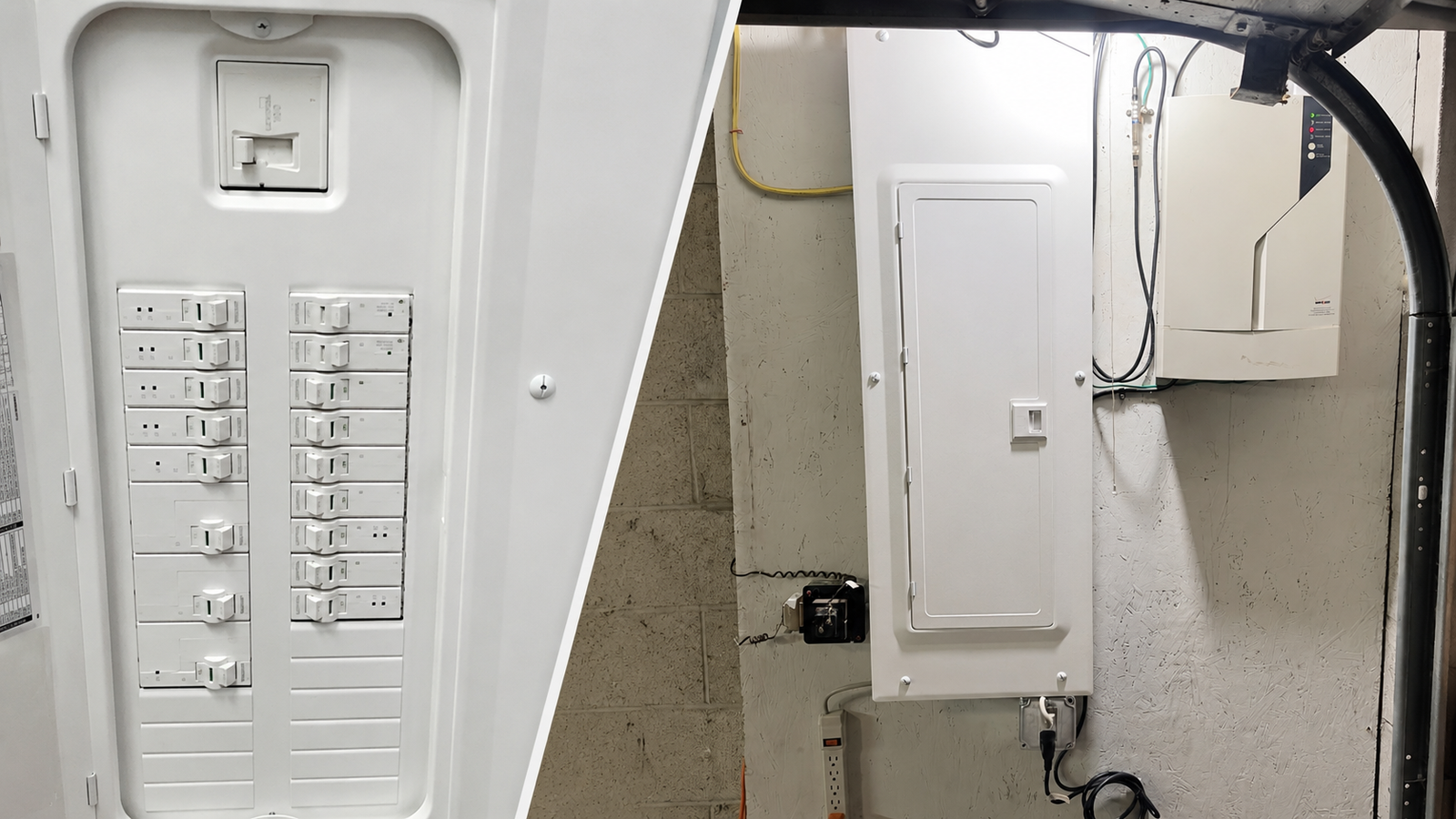
Your electrical panel is one of the most important parts of your home’s electrical system.
Electrical Panel Evaluation in Massachusetts. It distributes power to the circuits that support lighting, outlets, appliances, comfort systems, technology, and everyday electrical use. When the panel is working properly, most homeowners do not think about it often. However, when the panel is outdated, overloaded, damaged, or poorly organized, it can affect the safety and reliability of the entire property.
A professional Electrical Panel Evaluation in Massachusetts helps homeowners understand whether their current panel is still supporting the home properly or if an update may be needed.
Because many electrical problems begin at the panel, having it evaluated by a qualified electrician can help identify issues before they become more serious.
The Power Pro Electrical Services provides professional electrical services in Massachusetts for homeowners who need safe, reliable, and well-planned electrical work.
What Is an Electrical Panel?
An electrical panel, also called a breaker panel or service panel, is the central distribution point for electricity inside a home.
Power enters the property and is distributed through breakers to different circuits. These circuits support areas and equipment such as:
- lights;
- outlets;
- kitchen appliances;
- laundry equipment;
- heating and cooling systems;
- bathroom circuits;
- garage power;
- outdoor electrical systems;
- home office equipment;
- smart devices;
- specialty equipment.
Each breaker is designed to help protect a specific circuit. If there is a problem, such as an overload or short circuit, the breaker may trip to interrupt the flow of electricity.
Because the panel controls so much of the home’s electrical system, its condition and organization matter.
Why Electrical Panel Evaluation Matters
An electrical panel evaluation helps determine whether the panel is safe, accessible, properly organized, and capable of supporting the home’s current electrical demand.
Many homes were built before today’s electrical needs became common. Modern properties often use more equipment, more appliances, more devices, and more high-demand systems than older panels were originally designed to support.
For example, homeowners may add:
- mini split systems;
- electric vehicle chargers;
- recessed lighting;
- kitchen upgrades;
- bathroom heated floors;
- outdoor cameras;
- additional outlets;
- finished basements;
- home office equipment;
- workshop equipment;
- backup generator systems.
As electrical demand increases, the panel should be evaluated to make sure the system is still prepared to support the property safely.
Signs Your Electrical Panel May Need Attention
Some electrical panel issues are obvious. Others are easy to ignore.
You may need an electrical panel evaluation if you notice:
- frequent breaker trips;
- flickering lights;
- warm areas near the panel;
- buzzing sounds;
- burning smells;
- outdated equipment;
- rust or moisture near the panel;
- crowded or poorly organized breakers;
- limited room for additional circuits;
- electrical issues after adding new equipment;
- an older panel that has not been inspected in years.
These signs do not always mean the panel must be replaced. However, they do mean the system should be checked by a professional.
Ignoring panel issues can increase the risk of unreliable performance, equipment problems, or unsafe electrical conditions.
Frequent Breaker Trips
A breaker that trips occasionally may be responding to a temporary overload. However, frequent breaker trips should not be treated as normal.
Repeated tripping may point to:
- overloaded circuits;
- faulty equipment;
- damaged wiring;
- incorrect circuit distribution;
- panel limitations;
- a larger electrical issue.
A professional electrician can evaluate the circuit and panel to determine what is causing the problem.
Resetting the breaker again and again does not fix the underlying issue. It only delays the evaluation.
Outdated Electrical Panels
Older electrical panels may not be designed for the way homes use power today.
Even if the panel still works, it may not have enough capacity, space, organization, or modern safety features to support current needs.
An outdated panel can also make future upgrades more difficult.
If you are planning a renovation, adding new equipment, installing a mini split, upgrading lighting, adding outdoor power, or preparing for an electric vehicle charger, the panel should be reviewed before the work begins.
This helps determine whether the existing system can support the new load or if an upgrade should be planned.
Electrical Panel Organization
A good electrical panel should be organized, accessible, and clearly arranged.
Panel organization is not only about appearance. It affects safety, troubleshooting, future maintenance, and long-term serviceability.
A poorly organized panel can make it harder to identify circuits, diagnose problems, and plan future upgrades.
During an evaluation, an electrician may review:
- breaker layout;
- circuit labeling;
- available space;
- panel condition;
- signs of overheating;
- wire organization;
- grounding and bonding;
- accessibility;
- signs of improper modifications.
A clean and organized panel can make future electrical work easier and safer.
Panel Capacity and Modern Electrical Demand
Electrical demand has changed significantly over time.
Many homes now rely on multiple systems that require dependable power. These may include HVAC equipment, kitchen appliances, entertainment systems, computers, chargers, security cameras, smart home devices, and outdoor electrical features.
As a result, an older or undersized panel may no longer be the right fit for the property.
A panel evaluation can help determine whether the existing system has enough capacity for the current load and future plans.
This is especially important before adding large equipment or new circuits.
When to Schedule an Electrical Panel Evaluation
You do not need to wait for a major electrical problem before scheduling an evaluation.
A panel should be checked when:
- you are buying a home;
- you are renovating;
- you are adding new appliances;
- you are installing HVAC or mini split equipment;
- you are planning outdoor electrical work;
- you are adding a generator;
- you are installing an EV charger;
- breakers are tripping frequently;
- lights are flickering;
- the panel looks outdated;
- the panel has not been inspected in years.
In many cases, early evaluation helps prevent unnecessary delays and gives the homeowner a clearer plan before starting new electrical work.
Electrical Panel Evaluation Before Renovation
Renovation projects often place new demand on an existing electrical system.
A kitchen remodel, bathroom upgrade, finished basement, addition, or garage renovation may require new circuits, additional outlets, improved lighting, or dedicated equipment connections.
Before the project moves forward, the panel should be evaluated to confirm whether it can support the changes.
This is especially important because electrical upgrades are easier to plan before walls are closed, finishes are installed, or equipment is already in place.
Good planning helps avoid costly corrections later.
Electrical Panel Evaluation for Mini Splits and HVAC
Mini split systems and HVAC equipment often require dedicated electrical support.
Before installation, the panel should be reviewed to confirm whether the system can support the equipment safely.
This may include checking:
- available capacity;
- breaker space;
- circuit requirements;
- disconnect requirements;
- wiring needs;
- panel condition;
- overall system readiness.
When the electrical side is planned correctly, the equipment is better prepared to operate safely and reliably.
Electrical Panel Evaluation for EV Chargers
Electric vehicle chargers can place significant demand on a home’s electrical system.
Before installing an EV charger, the panel should be evaluated to determine whether the home has enough capacity and the correct electrical setup.
This does not always mean a full panel upgrade is required. However, it does mean the system needs to be reviewed before the charger is installed.
A professional evaluation helps prevent overload issues and supports safer installation planning.
Electrical Panel Evaluation for Generators
A standby generator system must be integrated with the home’s electrical infrastructure.
Before installing a generator, an electrician should review the panel, transfer equipment needs, service configuration, available space, and overall system condition.
The generator is only one part of a complete backup power system.
The panel and transfer setup must also be planned correctly so the system can operate safely when utility power is unavailable.
What Happens During an Electrical Panel Evaluation?
A professional electrical panel evaluation may include a visual inspection, review of panel condition, assessment of circuit organization, and discussion of the homeowner’s electrical needs.
The electrician may look for:
- signs of overheating;
- outdated equipment;
- damaged breakers;
- improper wiring;
- loose or unsafe conditions;
- rust or moisture;
- overloaded circuits;
- lack of available space;
- grounding or bonding concerns;
- panel accessibility;
- future upgrade needs.
The evaluation helps determine whether the panel is in acceptable condition or whether repairs, corrections, or an upgrade should be considered.
Does Every Panel Evaluation Lead to an Upgrade?
No. Not every panel evaluation results in a panel replacement.
Sometimes the panel only needs better organization, circuit corrections, labeling, breaker replacement, or other targeted electrical work.
In other cases, a panel upgrade may be the safer and more practical option.
The goal of an evaluation is not to replace equipment unnecessarily. The goal is to understand the condition of the system and make the right recommendation for the property.
A professional electrician should explain what was found and what options are available.
Electrical Panel Upgrade vs. Electrical Panel Repair
After an evaluation, a homeowner may need either repair work or a full panel upgrade.
A repair may be appropriate when the panel is still in good condition but has a specific issue that can be corrected.
A panel upgrade may be recommended when the panel is outdated, undersized, damaged, unsafe, or unable to support current and future electrical demand.
The right solution depends on the condition of the panel and the needs of the home.
That is why a professional evaluation is the first step.
Why Professional Panel Work Matters
Electrical panel work should always be handled by a qualified electrician.
The panel is connected to the main electrical distribution of the property, and mistakes can create serious safety risks.
Professional panel work helps protect:
- the home;
- the electrical system;
- connected equipment;
- future upgrades;
- long-term reliability;
- code compliance;
- homeowner safety.
A properly installed and maintained panel creates a stronger electrical foundation for the entire property.
Signs of a Well-Installed Electrical Panel
A well-installed panel should be clean, accessible, organized, and appropriate for the property’s electrical needs.
Signs of quality panel work may include:
- secure installation;
- clear breaker layout;
- proper labeling;
- organized wiring;
- correct breaker sizing;
- safe access space;
- proper grounding and bonding;
- clean workmanship;
- room for future planning when possible.
Good panel work is not only about how the panel looks. It is about whether the system is safe, reliable, and serviceable over time. Electrical Panel Evaluation in Massachusetts
Electrical Panel Evaluation in Massachusetts
Massachusetts homes often include a wide range of electrical conditions.
Some properties are newer and already prepared for modern electrical demand. Others may have older systems, additions, renovations, limited panel space, or outdated equipment.
Because every property is different, an electrical panel evaluation should be based on the actual condition of the system and the needs of the homeowner.
The Power Pro Electrical Services provides Electrical Panel Evaluation in Massachusetts for homeowners who need professional guidance, safe electrical work, and reliable upgrade planning.
Whether you are experiencing breaker issues, planning a renovation, adding new equipment, or simply want to know whether your panel is still supporting your home properly, our team can help.
Contact The Power Pro Electrical Services to schedule an electrical panel evaluation for your Massachusetts home.
Frequently Asked Questions:
What is an electrical panel evaluation?
An electrical panel evaluation is a professional review of the condition, organization, capacity, and safety of a home’s electrical panel.
How do I know if my electrical panel needs attention?
Frequent breaker trips, flickering lights, burning smells, warm areas near the panel, outdated equipment, or limited space for new circuits may indicate that the panel needs professional evaluation.
Does an electrical panel evaluation always mean I need an upgrade?
No. Some panels may only need corrections, repairs, labeling, or better organization. A full upgrade depends on the condition of the system and the electrical needs of the home.
When should I schedule an electrical panel evaluation?
You should schedule an evaluation when renovating, adding new equipment, installing a mini split, planning an EV charger, adding a generator, buying a home, or noticing electrical issues.
Can an old panel still be safe?
Some older panels may still function, but age alone does not confirm safety or capacity. A professional electrician should evaluate the panel to determine its condition.
Why does panel organization matter?
Panel organization helps with safety, troubleshooting, maintenance, inspections, and future electrical upgrades.
Who should evaluate my electrical panel?
An electrical panel should be evaluated by a qualified electrician who understands residential electrical systems, code requirements, panel safety, and upgrade planning.