
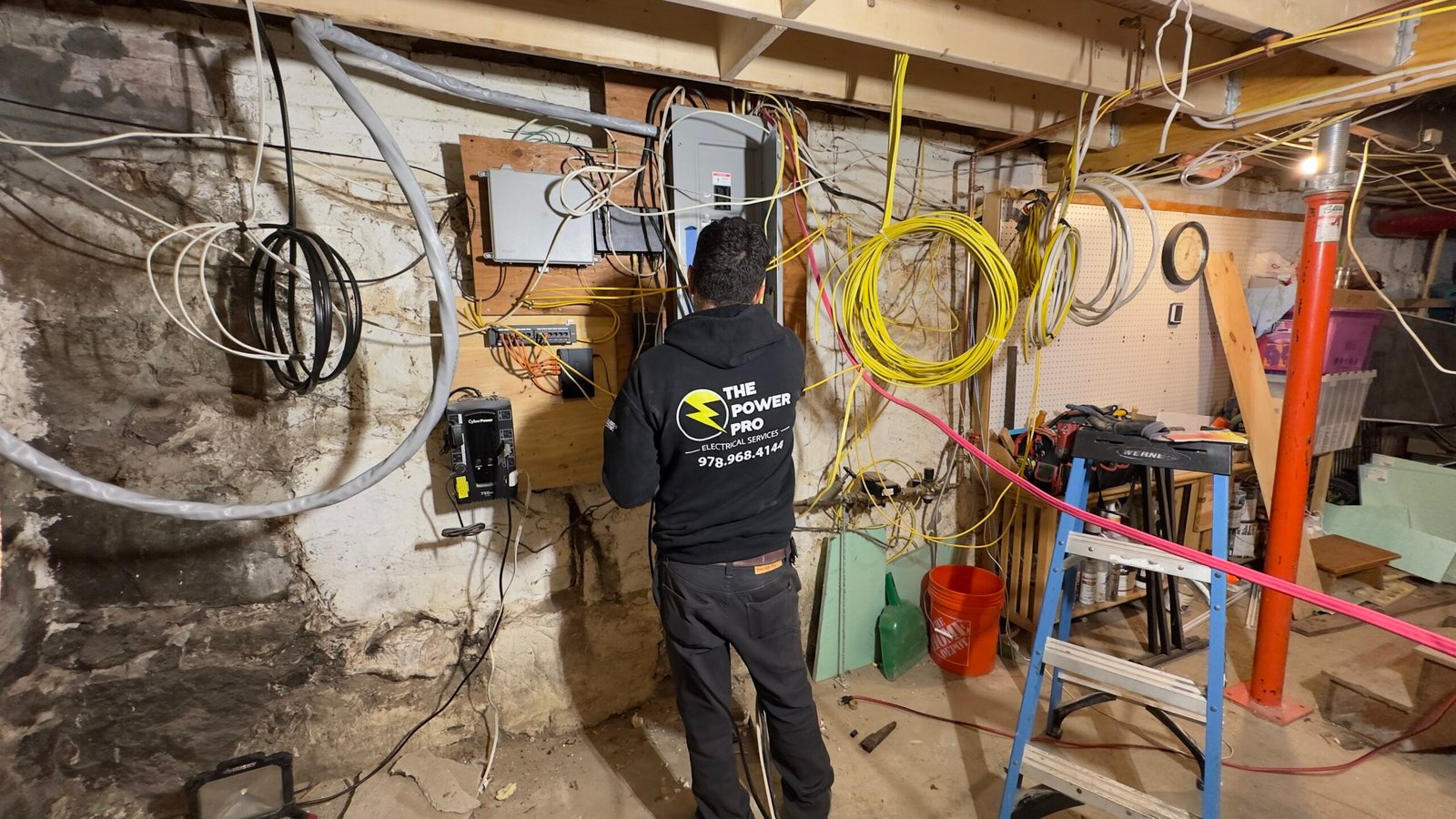
The electrical panel is one of the most important parts of a home’s electrical system.
It distributes power to lighting, outlets, appliances, HVAC equipment, technology, and the many electrical devices used throughout the property every day.
However, a panel should not be evaluated only by whether the lights turn on.
Its condition, capacity, accessibility, circuit organization, surrounding wiring, and ability to support current and future electrical demand all matter.
A professional Electrical Panel Upgrade in Massachusetts can help homeowners improve the electrical foundation of a property when the existing system is outdated, crowded, difficult to service, or no longer suited to modern electrical needs.
What Does an Electrical Panel Do?
The electrical panel receives power from the property’s electrical service and distributes it through individual circuits.
Each circuit is protected by a breaker designed to interrupt power under specific conditions.
Inside the home, those circuits may supply:
- lighting;
- outlets;
- kitchen appliances;
- HVAC equipment;
- mini splits;
- bathrooms;
- laundry equipment;
- garages;
- home offices;
- outdoor electrical systems;
- specialty equipment.
Because so many parts of the property depend on the panel, its condition affects the electrical system as a whole.
What Is an Electrical Panel Upgrade?
An electrical panel upgrade generally involves replacing or modifying the distribution equipment that serves the property’s branch circuits.
The exact scope depends on the existing system.
A project may involve:
- replacing an older panel;
- installing new breakers;
- reorganizing circuits;
- increasing available circuit space;
- updating feeder connections;
- improving labeling;
- correcting accessibility issues;
- preparing for additional electrical loads;
- coordinating the panel with other service equipment.
A panel upgrade does not always mean that the entire electrical service must be replaced.
Likewise, replacing the panel alone may not address every limitation in the service.
That is why an evaluation should come first.
Our guide to Electrical Service Inspection in Massachusetts explains why electricians often look beyond the panel before recommending larger upgrades.
Why Electrical Panel Organization Matters
A well-organized panel is easier to understand and easier to service.
That matters when an electrician needs to:
- identify a circuit;
- troubleshoot a problem;
- add new equipment;
- make future modifications;
- perform maintenance;
- inspect connections;
- isolate power safely.
Organization is not simply cosmetic.
A panel that is difficult to understand can make future electrical work more complicated.
Clear circuit identification and logical routing help create a system that is easier to manage over time.
Accessibility Is Part of the System
Electrical equipment eventually needs attention.
Panels may need inspection, troubleshooting, repairs, breaker replacement, circuit additions, or system upgrades.
For that reason, the equipment should remain accessible.
A panel surrounded by stored items, blocked by permanent construction, or positioned where it cannot be safely reached creates unnecessary difficulty.
Professional electrical planning considers not only how the equipment works today, but also how it will be serviced later.
Signs an Electrical Panel May Need Attention
Not every older panel needs immediate replacement.
However, certain conditions may justify a professional evaluation.
These can include:
- breakers that repeatedly trip;
- visible deterioration;
- overheating or unusual odors;
- limited breaker space;
- poorly identified circuits;
- damaged components;
- evidence of previous improper modifications;
- increasing electrical demand;
- planned renovations;
- new high-demand equipment;
- difficulty servicing the existing system.
The correct solution depends on the cause.
A professional electrician should evaluate the system before recommending replacement.
Repeated Breaker Trips Should Be Investigated
A breaker that trips occasionally because of a known temporary overload is different from a breaker that continues to trip without a clear explanation.
Repeated trips are a sign that something in the circuit should be evaluated.
Possible causes may include:
- excessive load;
- equipment problems;
- wiring faults;
- circuit issues;
- another condition requiring troubleshooting.
The breaker is responding to something.
Simply resetting it repeatedly does not identify the cause.
Professional electrical troubleshooting uses testing and measurements to determine what the system is actually doing.
When Electrical Demand Outgrows the Panel
Modern homes often use much more electricity than they did decades ago.
New electrical loads can include:
- mini split systems;
- larger HVAC systems;
- EV chargers;
- electric ranges;
- heated floors;
- hot tubs;
- workshops;
- home office equipment;
- outdoor kitchens;
- standby generators;
- additions and finished basements.
Adding one new device does not automatically mean a panel must be replaced.
However, when several new loads are introduced, available capacity and circuit space should be evaluated.
The question is not simply whether a new breaker fits.
The electrician must consider whether the electrical system can properly support the additional demand.
Panel Upgrades During Renovations
Renovations are one of the best times to evaluate an electrical panel.
A remodel may add:
- new rooms;
- additional outlets;
- lighting;
- kitchen appliances;
- HVAC equipment;
- bathrooms;
- offices;
- entertainment systems;
- outdoor electrical features.
At the same time, walls may already be open and electricians may have better access to existing wiring.
This makes it easier to understand how the current system is organized and what may need to change.
For construction projects, our article on Electrical Rough-In in Massachusetts explains why electrical decisions are easier to make before finished walls limit access.
A New Panel Does Not Fix Poor Planning
Replacing the panel can improve an electrical system, but it does not automatically solve every electrical problem.
The surrounding infrastructure still matters.
An electrician may also need to consider:
- feeder conductors;
- service equipment;
- grounding and bonding;
- circuit configuration;
- wiring condition;
- electrical demand;
- disconnect equipment;
- future expansion plans.
That is why panel work should be approached as part of a complete electrical system.
The equipment must make sense for the property.
Panel Space and Future Circuits
One advantage of evaluating the panel during a larger electrical project is the opportunity to think ahead.
A homeowner may not need an EV charger, mini split, generator, or outdoor kitchen today.
But if those upgrades are likely in the future, it may make sense to consider them during planning.
Future-ready planning can help avoid unnecessary limitations later.
This does not mean installing oversized equipment without reason.
It means understanding how the property may evolve and choosing an electrical configuration that supports realistic future needs.
Why Circuit Labeling Matters
Circuit labels may seem like a small detail, but they are extremely useful.
Accurate labeling makes it easier to identify which breaker controls:
- a room;
- an appliance;
- an HVAC system;
- outdoor equipment;
- lighting;
- specialty circuits.
When something needs to be serviced, clear identification saves time and reduces confusion.
Poor or outdated labels should be corrected when circuits are verified.
Electrical Panel Versus Electrical Service Upgrade
These terms are often used interchangeably, but they are not always the same project.
An electrical panel upgrade generally focuses on the distribution panel and branch circuits.
An electrical service upgrade may involve a larger portion of the infrastructure supplying the property.
That can include:
- service entrance conductors;
- disconnect equipment;
- meter-related infrastructure;
- feeder conductors;
- grounding and bonding;
- the electrical panel.
For a deeper explanation, read our guide to Electrical Service Upgrade in Massachusetts.
A professional evaluation determines which type of work is actually needed.
Why Testing Is Important
Electrical work should not be based on assumptions.
Testing allows electricians to gather information about the system before deciding what needs to be repaired or changed.
Depending on the situation, testing may help evaluate:
- voltage;
- circuit behavior;
- continuity;
- electrical load;
- connection conditions;
- equipment operation.
Real measurements provide better information than guessing from appearance alone.
That is especially important when troubleshooting an existing system.
Clean Work Is More Than Appearance
A clean electrical installation is easier to inspect, understand, and maintain.
Good workmanship may include:
- organized conductors;
- properly supported cables;
- secure connections;
- clear labels;
- accessible equipment;
- logical circuit routing;
- properly mounted components.
The final appearance reflects planning, but the larger benefit is serviceability.
A system that is easier to understand is generally easier to work on when future electrical needs arise.
What Happens During a Panel Evaluation?
The exact process depends on the property, but an electrician may review:
Existing Panel Condition
The enclosure, breakers, connections, labeling, and visible components are evaluated.
Circuit Configuration
The electrician reviews how circuits are arranged and whether there are obvious organization or capacity concerns.
Electrical Demand
Existing and planned electrical loads may be considered.
Surrounding Infrastructure
Feeders, grounding, disconnects, or other service equipment may also need evaluation.
Future Needs
Upcoming renovations or equipment installations can affect the recommended solution.
The objective is to determine what the property actually needs rather than assuming that every system requires the same upgrade.
Should Every Old Panel Be Replaced?
No.
Age is one factor, but it is not the only factor.
A professional recommendation should consider:
- equipment condition;
- electrical demand;
- component availability;
- system configuration;
- safety concerns;
- planned upgrades;
- serviceability.
Some properties may need a complete replacement.
Others may need repairs, circuit corrections, or a different type of electrical improvement.
Evaluation should come before replacement.
When Should You Schedule a Panel Evaluation?
A professional evaluation may be helpful when:
- you are planning a renovation;
- breakers frequently trip;
- you are adding major electrical equipment;
- the panel appears crowded;
- circuits are poorly labeled;
- electrical components show deterioration;
- you are considering an EV charger;
- you are adding HVAC equipment;
- you are planning a standby generator;
- the existing electrical system is unfamiliar.
You do not need to wait for a complete electrical failure before having the system evaluated.
Professional Electrical Panel Upgrade in Massachusetts
A panel is more than a box of breakers.
It is the central distribution point connecting many of the electrical systems used throughout a property.
A professional Electrical Panel Upgrade in Massachusetts should therefore consider organization, capacity, accessibility, existing infrastructure, and the future needs of the property.
The Power Pro Electrical Services provides panel evaluations, electrical panel upgrades, troubleshooting, service work, and residential and commercial electrical services throughout Massachusetts.
Our goal is to understand the existing system first and recommend the work the property actually needs.
Contact The Power Pro Electrical Services to discuss your electrical panel or upcoming electrical project.
Frequently Asked Questions
How do I know if my electrical panel needs to be upgraded?
Repeated breaker trips, limited circuit space, deterioration, planned electrical additions, renovations, or increased electrical demand are reasons to schedule a professional evaluation.
Is a panel upgrade the same as increasing electrical service capacity?
Not necessarily. Panel replacement and electrical service upgrades can involve different equipment and scopes of work.
Does an EV charger require a panel upgrade?
Not always. An electrician should evaluate available capacity, panel configuration, and the electrical requirements of the charger.
Can a mini split require electrical panel work?
A mini split requires appropriate electrical support, but whether panel modifications are necessary depends on the existing system and available capacity.
Why does panel organization matter?
A well-organized panel is easier to inspect, troubleshoot, label, maintain, and modify in the future.
Should circuit breakers be labeled?
Yes. Accurate circuit labeling helps homeowners and electricians identify what each breaker controls.
Can an old panel still be safe?
Age alone does not determine whether replacement is needed. Condition, configuration, equipment type, electrical demand, and other factors should be professionally evaluated.
Why should the surrounding wiring be evaluated during a panel project?
The panel depends on feeders, branch circuits, grounding, service equipment, and other components. Evaluating the surrounding infrastructure helps ensure the upgrade makes sense as part of the complete electrical system.