
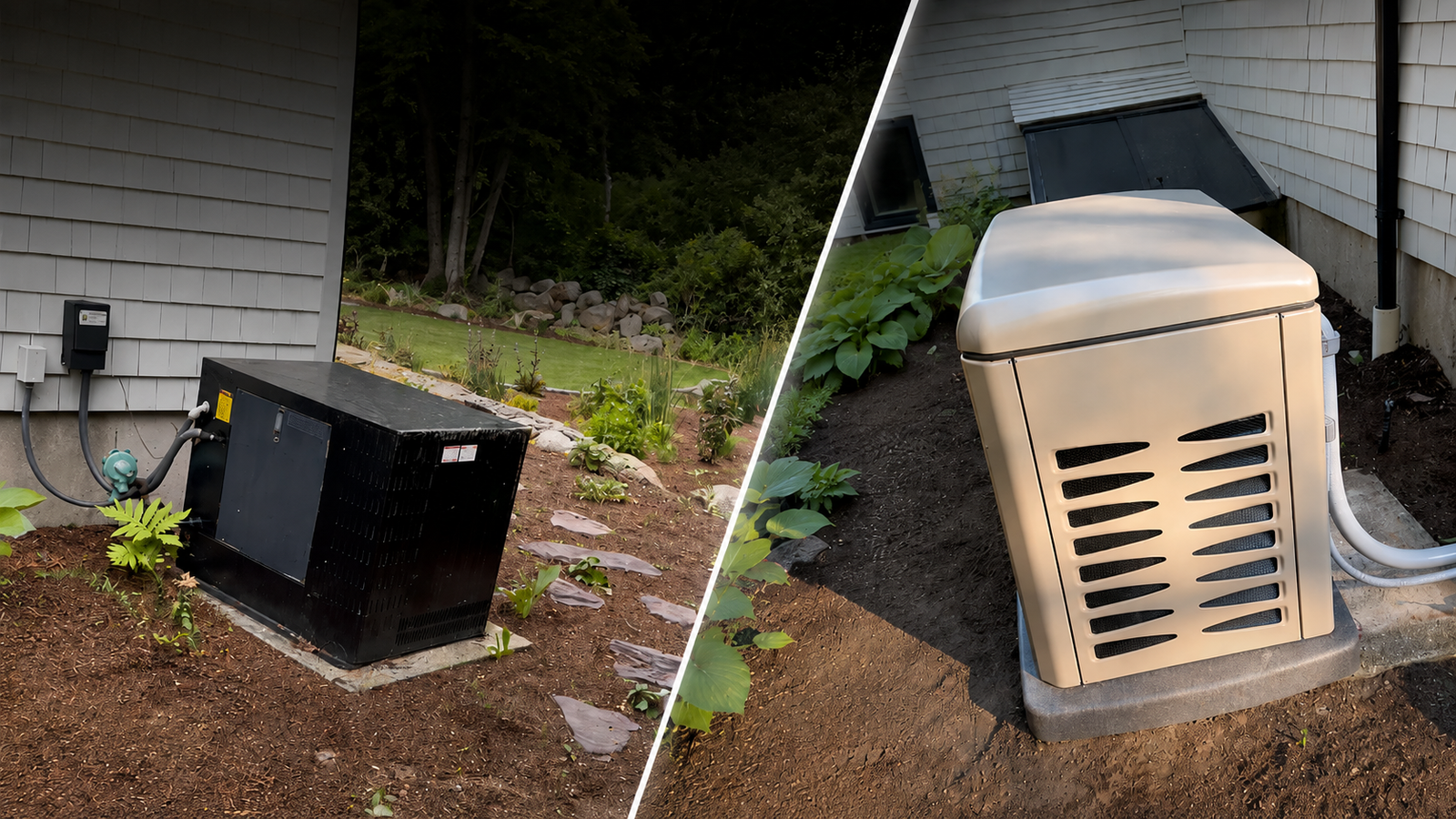
Power outages can disrupt heating, refrigeration, lighting, internet access, medical equipment, and other essential systems inside a home. For Massachusetts homeowners, a residential standby generator can provide greater security and continuity when utility power is unavailable.
However, reliable backup power depends on much more than purchasing a generator and placing it beside the house.
A professional standby generator installation requires proper planning, correct equipment sizing, safe placement, electrical service integration, transfer equipment, protected wiring, and careful coordination between every component.
Before beginning a standby generator installation in Massachusetts, homeowners should understand how the complete system works and what must be evaluated first.
What Is a Standby Generator?
A standby generator is a permanently installed backup power system designed to supply electricity during a utility outage.
Unlike a portable generator, a standby unit is connected to the home’s electrical system and typically works with transfer equipment that allows the property to move from utility power to generator power.
Depending on the system and project design, the generator may support selected essential circuits or a larger portion of the home.
When utility power is interrupted, the system can detect the outage and transfer the electrical load to the generator. Once utility power returns, the system transfers the home back to the electrical grid.
The generator itself is only one part of this process. Reliable operation depends on the complete electrical system behind it.
Three Questions to Ask Before Installing a Standby Generator
Before selecting equipment or beginning installation, three important areas should be evaluated:
- How much electrical capacity does the home require?
- Where should the generator be installed?
- Is the existing electrical system ready for integration?
These questions help determine the correct system design and reduce the risk of choosing equipment that does not match the property’s needs.
1. What Electrical Load Needs to Be Supported?
Generator sizing should be based on the electrical loads the homeowner wants to maintain during an outage.
These may include:
- heating or cooling equipment;
- refrigerators and freezers;
- lighting circuits;
- well pumps or sump pumps;
- internet and communication equipment;
- kitchen appliances;
- garage doors;
- home office equipment;
- medical devices;
- other essential household systems.
Not every home requires the same generator capacity.
Some homeowners want backup power for only the most important circuits. Others want a system capable of supporting most or all of the property.
A professional electrical evaluation helps identify the actual demand and determine whether the proposed equipment can support it safely.
Choosing a generator based only on physical size, brand, or price can result in a system that is either insufficient for the home or unnecessarily oversized.
2. Where Should the Generator Be Installed?
Placement is an important part of standby generator installation in Massachusetts.
The equipment must be installed in a location that supports safe operation, proper airflow, access for maintenance, and connection to the home’s electrical infrastructure.
Important placement considerations may include:
- distance from windows, doors, and openings;
- clearance around the equipment;
- access for future maintenance;
- proximity to electrical service equipment;
- local property conditions;
- drainage and ground stability;
- manufacturer installation requirements;
- applicable local codes and permitting requirements.
The generator also needs a stable and properly prepared base.
A carefully selected location can make installation, service, and long-term maintenance easier while helping the system operate as intended.
3. Is the Existing Electrical System Ready?
A standby generator must be integrated with the property’s existing electrical system.
Before installation, the electrical service, meter area, panel configuration, available space, wiring, grounding, and other components may need to be evaluated.
Depending on the property, the project may require:
- transfer equipment;
- service-rated disconnect equipment;
- new conduit;
- properly sized conductors;
- panel modifications;
- meter-area work;
- grounding and bonding adjustments;
- equipment relocation;
- electrical service upgrades.
Older homes may have electrical systems that were not designed with modern backup power equipment in mind.
This does not automatically mean that a complete service replacement is necessary. However, the existing system must be assessed before the generator is connected.
Why the Transfer System Matters
The transfer system is one of the most important parts of a standby generator installation.
Its purpose is to manage the transition between utility power and generator power.
During an outage, the transfer equipment separates the home from the utility supply and allows the generator to serve the designated electrical loads. When utility power returns, the system transfers the property back to the grid.
This separation is essential for safe operation.
Without proper transfer equipment, generator power could potentially feed into utility lines, creating a serious hazard for utility workers and damaging electrical equipment.
A complete standby power system therefore depends on both the generator and the equipment that safely controls the source of power.
The Generator Is Only One Part of the System
Homeowners often focus primarily on the generator unit itself. However, the reliability of the system depends on how every component works together.
A complete installation may include:
- the standby generator;
- automatic or manual transfer equipment;
- service disconnect equipment;
- electrical panel integration;
- conduit and wiring;
- grounding and bonding;
- fuel-system coordination;
- equipment mounting;
- testing and commissioning.
Each component has a specific function.
Even high-quality equipment may not perform reliably if the electrical integration is incomplete, incorrectly sized, or poorly installed.
What Happens During a Professional Installation?
Although every property is different, a professional standby generator project generally includes several stages.
Property and Electrical Evaluation
The contractor reviews the home’s electrical service, panel, desired backup loads, equipment location, and installation conditions.
System Planning
The generator capacity, transfer equipment, wiring requirements, placement, and integration method are determined.
Site Preparation
The installation area is prepared so the generator can be mounted on a stable base with the required access and clearances.
Electrical Installation
The electrician installs the necessary transfer equipment, conduit, conductors, disconnects, and electrical connections.
System Integration
The generator is connected to the appropriate electrical equipment and coordinated with the home’s service.
Testing
The system is inspected and tested to confirm that the transfer process and electrical connections operate correctly.
A professional installation should prioritize not only whether the generator starts, but whether the complete system responds safely and reliably.
Signs of a Proper Standby Generator Installation
A well-executed installation should appear organized and intentional.
Important indicators include:
- securely mounted equipment;
- properly supported conduit;
- protected wiring;
- clean routing;
- accessible disconnects;
- clear equipment labeling;
- appropriate clearances;
- organized service connections;
- a stable generator base;
- equipment positioned for future maintenance.
Clean workmanship is not only about appearance.
An organized installation can make future inspection, maintenance, troubleshooting, and repair easier.
Why Professional Electrical Integration Is Essential
Standby generators involve high electrical loads and direct integration with the home’s utility service.
Improper installation can create risks such as:
- electrical shock;
- fire hazards;
- damaged equipment;
- unreliable transfer operation;
- overloaded circuits;
- unsafe backfeeding;
- code violations;
- difficulty obtaining approval or inspection.
Because the generator interacts with the property’s main electrical infrastructure, this type of work should be completed by a qualified electrical contractor.
The objective is not simply to produce power. The objective is to create a system that can transition safely and perform reliably during an actual outage.
Standby Generators and Massachusetts Weather
Massachusetts properties may experience outages caused by snow, ice, wind, falling trees, severe storms, and utility disruptions.
During colder months, losing electrical power can also affect heating equipment, well pumps, communications, refrigeration, and other essential systems.
A properly planned standby generator can help homeowners maintain critical functions until utility power is restored.
However, the system should be designed around the property’s actual needs rather than treated as a one-size-fits-all solution.
Maintenance After Installation
A standby generator requires ongoing maintenance to remain ready for use.
Maintenance may include:
- periodic visual inspections;
- battery checks;
- oil and filter service;
- testing of the transfer system;
- inspection of electrical connections;
- removal of debris around the equipment;
- professional service according to the manufacturer’s schedule.
Homeowners should also keep the area around the generator clear and ensure that access is available for maintenance.
A backup power system provides the greatest value when it is maintained before an emergency occurs.
Choosing a Contractor for Generator Installation
When selecting a contractor, homeowners should look beyond the generator brand.
Important questions include:
- Will the existing electrical service be evaluated?
- How will the required generator capacity be determined?
- Is transfer equipment included?
- Will permits and inspections be addressed?
- Who is responsible for electrical integration?
- Will the system be tested after installation?
- Is the contractor experienced with residential service equipment?
- Will the final installation remain accessible for maintenance?
A contractor should be able to explain how the generator, transfer system, electrical service, wiring, and property conditions will work together.
Professional Standby Generator Installation in Massachusetts
A standby generator can provide dependable backup power, but the equipment must be supported by a properly designed electrical system.
Capacity, placement, transfer equipment, wiring, service integration, and testing all contribute to how the system performs when utility power is lost.
The Power Pro Electrical Services provides professional standby generator electrical installation and integration for residential properties in Massachusetts.
Our team focuses on proper planning, safe connections, organized installation, and reliable long-term performance.
Contact The Power Pro Electrical Services to discuss a standby generator installation for your Massachusetts home.
Frequently Asked Questions
Does a standby generator turn on automatically?
Many standby generator systems use automatic transfer equipment that detects a utility outage and starts the transfer process. The exact operation depends on the equipment and system design.
Can a standby generator power the entire house?
Some systems can support most or all household loads, while others are designed for selected essential circuits. The correct option depends on generator capacity, electrical demand, and the property’s infrastructure.
Does the electrical panel need to be replaced?
Not always. The existing panel and electrical service should be evaluated to determine whether modifications, additional equipment, or an upgrade are required.
How is a standby generator connected to the home?
The generator is connected through approved transfer equipment, conductors, conduit, disconnects, and other electrical components designed for the specific property.
Where should a residential generator be installed?
The location depends on manufacturer requirements, property conditions, required clearances, access, ventilation, electrical infrastructure, and applicable local rules.
Why is a transfer switch necessary?
The transfer system safely controls whether the home receives power from the utility or the generator. It also helps prevent unsafe backfeeding into utility lines.
Do standby generators require maintenance?
Yes. Regular inspection, testing, battery care, fluid service, and manufacturer-recommended maintenance help keep the system ready for an outage.