
Standby vs. Portable Generators: Energy Solutions and Home Infrastructure in Massachusetts. The modernization of homes in towns like Chelmsford, Westford, and Billerica has driven residential electrical demand to new heights. With the widespread adoption of central HVAC systems, electric vehicles (EVs), and smart home automation, effective energy management has become a central pillar in maintaining a functional and comfortable property.
In this context, acquiring a self-generating energy system is a significant technical decision. Homeowners often evaluate two distinct categories of equipment: portable generators and standby generators. While both serve the function of providing electricity, they belong to completely different engineering categories regarding capacity, convenience, and infrastructure integration.
This technical article explores the fundamental distinctions between these technologies, assisting in the decision-making process for homeowners who prioritize operational excellence and property value.
Technical Analysis: Portable Generators
Portable generators are mobile units, originally designed for job sites or recreational use, but often adapted for auxiliary residential support. They predominantly operate via internal combustion engines fueled by gasoline.
The defining characteristic of this modality is manual operation. Utilizing a portable generator requires removing it from storage, positioning it in a well-ventilated outdoor area, and manually connecting it to the residence.
Load Limitations and Connectivity
Due to their compact design, the generation capacity (measured in kilowatts) is restricted. A standard portable model may sustain basic lighting and refrigeration circuits but rarely possesses sufficient power to operate central air conditioning systems or multiple high-draw appliances simultaneously.
To integrate this equipment into the home’s grid safely, the installation of a Manual Transfer Switch is mandatory. This device isolates the internal wiring from the utility grid, allowing generator power to enter the electrical panel without the risk of short circuits or “backfeeding.” Without this component, utilizing a portable generator is limited to running extension cords directly to appliances, which is impractical for powering fixed home systems.
The Integrated Solution: Standby Generators
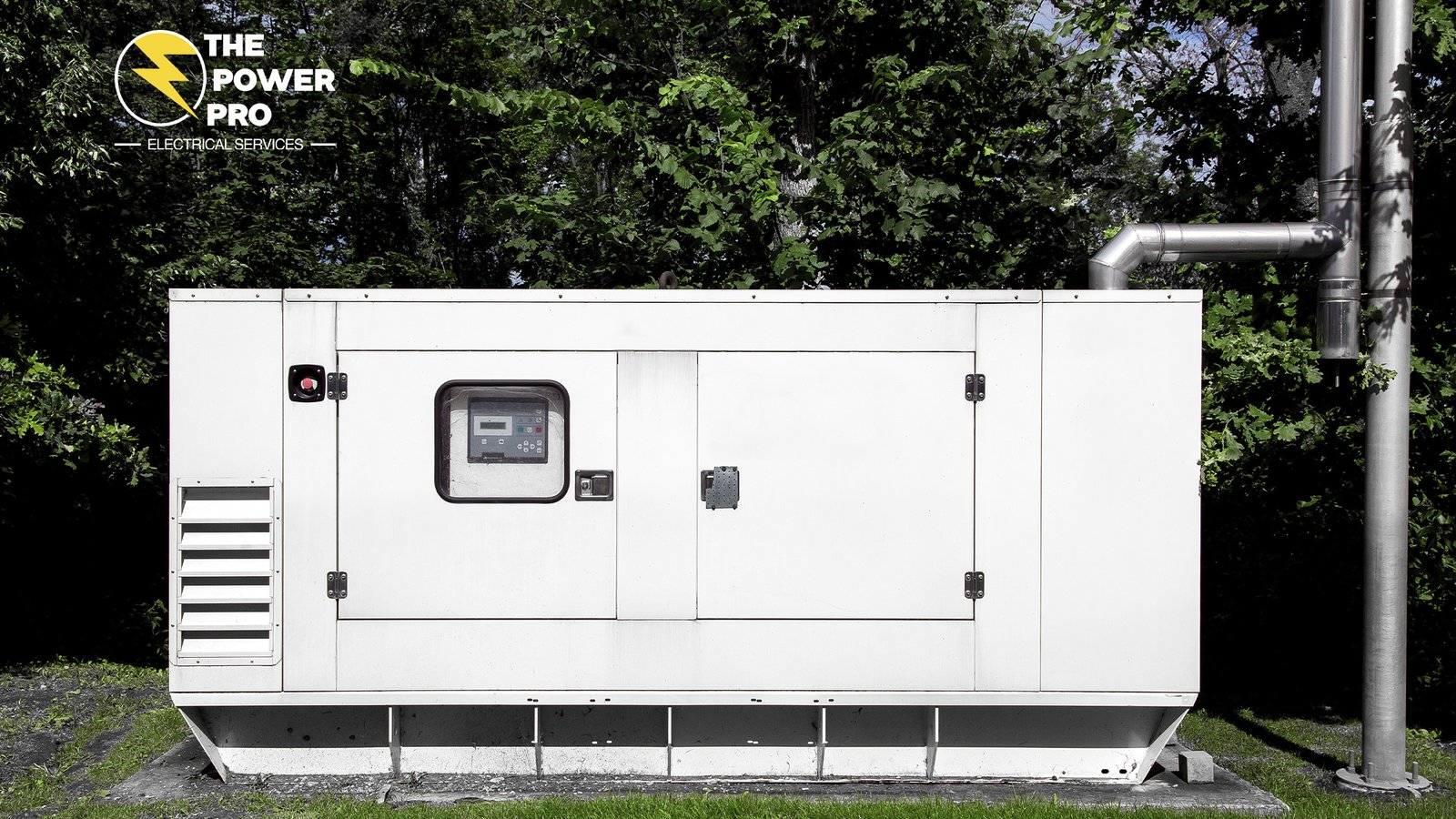
Standby generators represent the technological evolution in the residential energy sector. This is a fixed, permanent installation, visually comparable to an HVAC condensing unit located on the property’s exterior perimeter.
The engineering behind the standby system focuses on total autonomy. The equipment is connected directly to the residence’s fuel source—typically Natural Gas or Liquid Propane (LP)—and integrated into the main electrical panel via an Automatic Transfer Switch (ATS).
The Automation Differential
The crucial distinction between the two technologies lies in the system’s intelligence. The standby generator operates under a continuous monitoring protocol:
- Monitoring: The system analyzes the utility power voltage 24/7.
- Detection: Upon detecting a voltage loss or irregularity, the generator engine initiates its startup cycle.
- Transfer: The Automatic Transfer Switch (ATS) disconnects the utility line and connects the generator line.
- Operation: The residence is seamlessly powered by the generator.
This entire cycle occurs in seconds, requiring no human intervention. For homeowners who travel frequently or own secondary residences in Middlesex County, this autonomy ensures that HVAC systems, sump pumps, and security systems remain operational regardless of whether the property is occupied.
Infrastructure and Comfort Comparison
When planning home improvements, it is essential to compare how each system impacts the property’s routine and structure:
- Fuel and Logistics: Portable generators require periodic refueling with gasoline, necessitating fuel storage and constant monitoring of tank levels during operation. Standby generators, connected to the gas line, have a continuous supply, eliminating refueling logistics entirely.
- Noise Management: High-end residential projects require acoustic control. Portable generators often operate at high decibel levels. In contrast, standby models are engineered with sound-attenuated enclosures and exhaust technologies that drastically reduce noise emissions, complying with residential neighborhood noise standards.
- Aesthetics and Valuation: The professional installation of a fixed generator is considered a capital improvement. Beyond integrating visually with the landscape, it adds market value to the property, serving as an attractive differentiator in a future sale. A portable generator, being personal property, does not transfer value to the real estate asset.
Maintenance and Investment Longevity
Equipment longevity is determined by maintenance protocols. Standby systems feature internal “exercise” programming. Once a week, the generator automatically runs for a few minutes to lubricate the engine and run system diagnostics, ensuring the equipment is always in peak operating condition.
Portable generators, conversely, rely exclusively on the owner’s discipline to perform preventive maintenance, oil changes, and fuel drainage when not in use, making them more susceptible to mechanical failure due to prolonged inactivity.
Conclusion: Choosing Based on Profile and Necessity
The decision between a portable unit and a standby system must align with the level of comfort and automation desired for the residence. The portable model serves as a basic support tool, requiring manual effort. The standby generator establishes itself as a complete infrastructure solution, offering uninterrupted power and asset protection with technological sophistication.
For homes in Lowell and the surrounding region that already feature modern climate control and automation systems, a standby generator is the natural complement to ensure full household functionality.
Energy Sizing Consultation
The correct implementation of a generator system requires precise load calculations and installation in compliance with Massachusetts electrical codes. For a technical feasibility study and installation in Chelmsford and surrounding towns, consultation with licensed specialists is recommended. Visit our website for more information on residential electrical services.